United by the same mission to care for and inspire
The daily routine of CRASSA's technical director is anything but monotonous. No two days are the same. She is primarily responsible for rehabilitation, which also includes environmental education, as well as providing support to the infirmary and feeding the animals: "The philosophy here is that everyone does a little bit of everything, depending on the needs, although we divide the work into two main areas: veterinary medicine, supervised by clinical director Andreia Gonçalves, and rehabilitation, under my responsibility. This is the message we try to convey to the volunteers, many of whom are university students in the sciences or on internships, giving them the opportunity to try a little bit of everything so that they can discover what they really like and want to do in life."
With regard to environmental education in particular, this organisation has been developing protocols with local councils, schools and other public and private institutions to promote not only information sessions and the release of animals into the wild, but also various activities for children and families.
"We try to reach as wide an audience as possible, both through social media and training activities. Basically, we try to take advantage of any opportunity to spread our knowledge and our work, because, in fact, any of us could find an injured wild animal in need of help. On the other hand, it is also through these actions that we are often able to raise donations and recruit volunteers, so these are very interesting and very important activities for the centre."
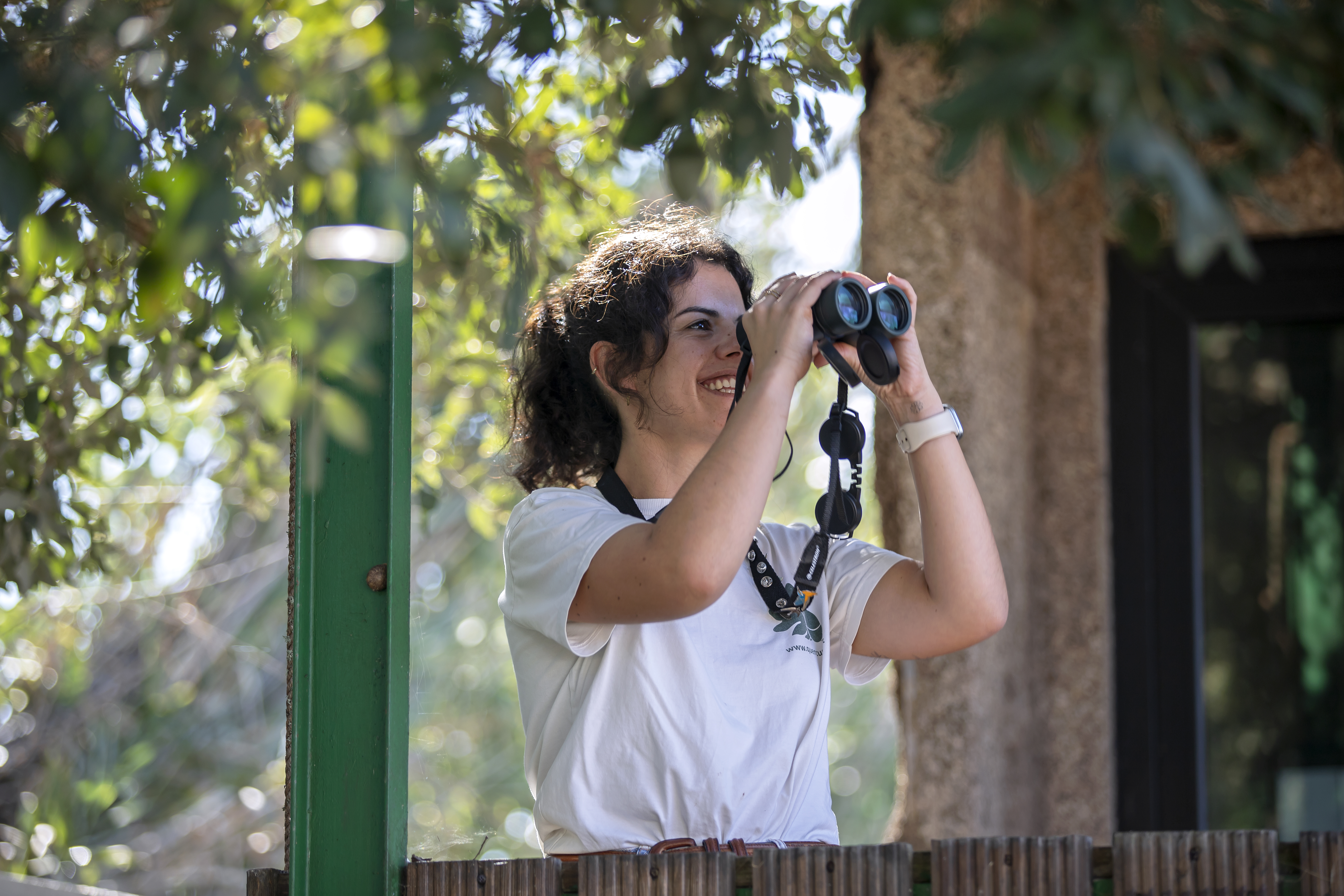
Birdwatching is one of Carolina's favourite hobbies.
Among the hobbies of CRASSA's technical director are walks through the Santo André and Sancha Lagoons Nature Reserve, accompanied by her binoculars, which are essential for one of her favourite activities, birdwatching. She likes to ‘unwind’ on the beach, watch the beautiful sunsets that the Alentejo coast offers, and when she goes hiking in the Reserve, she never forgets her binoculars, which allow her to observe birds. She also volunteers at the National Ornithological Station and with domestic animals, such as dogs and cats.
To make all this possible, CRASSA relies on support, mainly from patrons, which is essential, for example, to carry out construction work and purchase equipment.