In Caxias, there is a community of residents testing innovative energy solutions

In Caxias, there is a community of residents testing innovative energy solutions

Business

March 2024

Ensuring renewable energy for the 20 buildings that make up the Caxias Living Lab energy community is the main objective of this project. Between individuals and institutions, green energy is produced and shared to reduce costs and increase efficiency.

The sunbeams covering the roof of the Municipal Market of Caxias, in Oeiras, clearly represent the potential of the Caxias Living Lab project, an energy community created by Galp to test innovative solutions. Inside, several small producers have come together and, over the next few years, will produce green energy and share it among themselves, according to each one's needs.


Caxias Living Lab uses two hundred photovoltaic panels installed in a community where excess energy produced can be used by any of the project participants. 


This neighbourhood network consists of 20 buildings and ten renewable energy producers using two hundred installed photovoltaic panels, which benefit all participants. The secret to success is to bring together members with different consumption patterns, so that the excess energy produced by one member can be used in real time by another of these neighbours. 


How does it work?
How does it work?

Caxias Living Lab brings together several small producers who will generate green energy and share it among themselves. Sérgio Santos, one of the members of Caxias Living Lab, explains that the goal ‘is to optimise energy production and consumption by creating a mixed community. There are people who live in flats and cannot have solar panels, but who can benefit from the energy produced by those who have this equipment.’

Let's look at some practical examples. Another neighbour in this community is the Nossa Senhora das Dores Parish Community Centre (CCPNSD), which, by its very nature, has a very different and more demanding consumption pattern than Sérgio Santos. "The installation of the panels was offered by Galp. In exchange, we share our consumption data and contribute energy to our neighbours,‘ the director of the CCPNSD tells Energiser. Inês Franco Frazão's enthusiasm is evident, and it is easy to see why: ’in addition to saving on our energy bill, we are improving the environment by producing green energy and strengthening the community spirit." 

In both cases, the expectation is that energy costs will be reduced by between 30% and 35%, depending on the usage of each member of the Caxias Living Lab. Overall, the project will prevent the emission of around 20 tonnes of CO2. 

The energy generated by the photovoltaic panels powers electric water heaters, heat pumps and electric vehicle chargers. Once each user's consumption needs have been met, the energy is then stored in decentralised batteries distributed throughout the community. For Galp, the investment makes perfect sense, as it allows it to test innovative solutions and collect data to improve this decentralised production model, but also to be able to later roll out this type of solution to more consumers. 
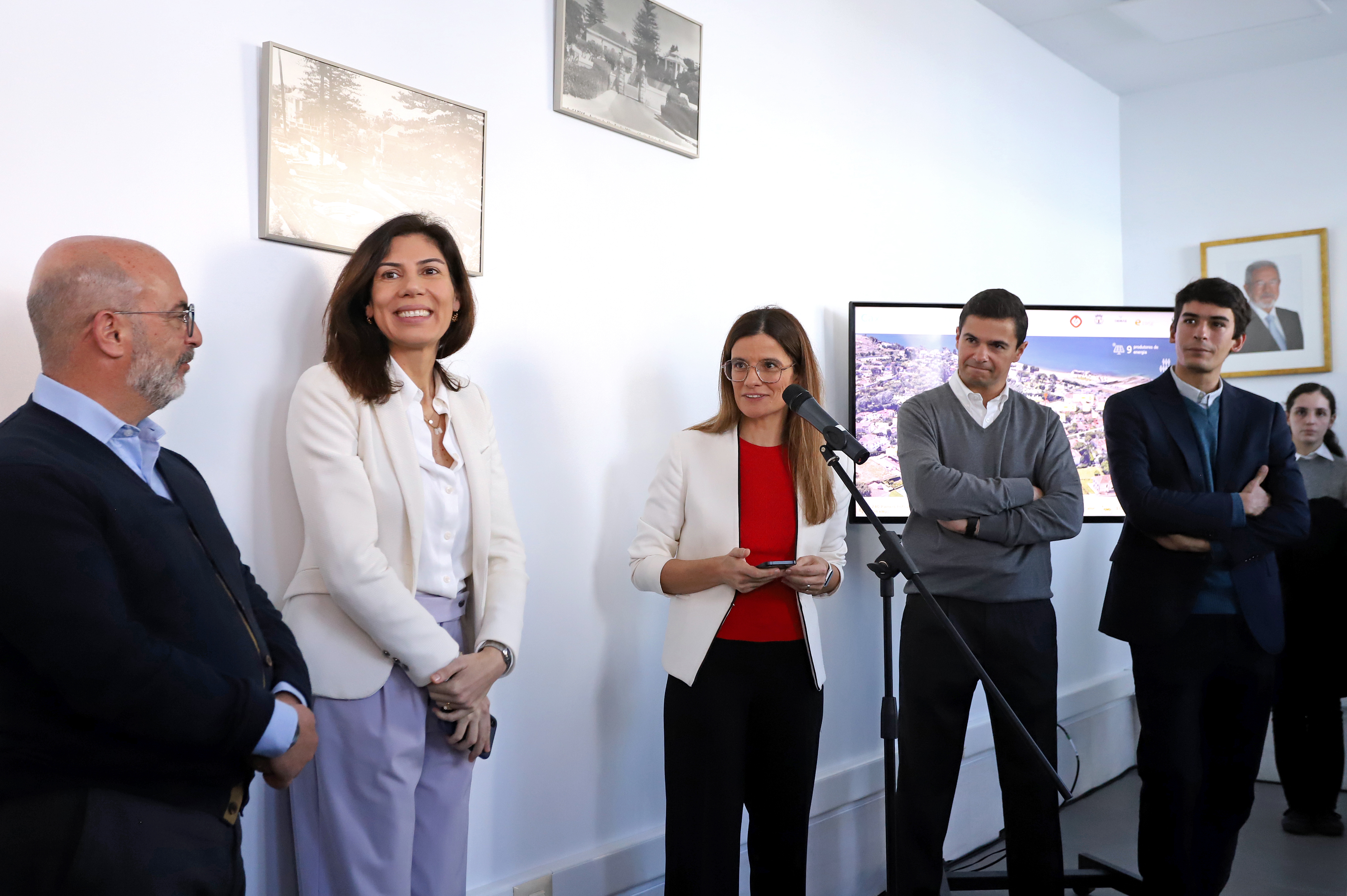
 

Ana Casaca, Director of Innovation at Galp, highlighted the role of Caxias Living Lab in the energy transition during the project presentation

‘At the Parish Centre, for example, the roof did not allow for the installation of panels, so Galp did something unprecedented and installed vertical panels,’ explained Carla Tavares, director of Galp's Renewable Energy and Commercial Innovation Centres. The name of the project is no coincidence, as Ana Casaca, director of innovation at the energy company, explains. ‘Caxias Living Lab has a laboratory-like approach, focusing on continuous improvement and experimentation with users. It symbolises Galp's spirit of openness to the outside world, its willingness to learn from the community and, above all, its commitment to co-creating the energy system of the future with citizens,’ she emphasises. 

Caxias Living Lab currently comprises several producers and consumers, namely the Nossa Senhora do Vale Primary School and Kindergarten, the CCPNSD, the Caxias Municipal Market and several private homes in the neighbourhood. ‘I am very happy to be able to use this equipment and understand how I can organise my life to maximise the potential of the installed photovoltaic panels,’ concludes Sérgio Santos. The energy generated by the photovoltaic panels can be used to power electric vehicle chargers, but also water heaters and heat pumps.

Print:

Share: